

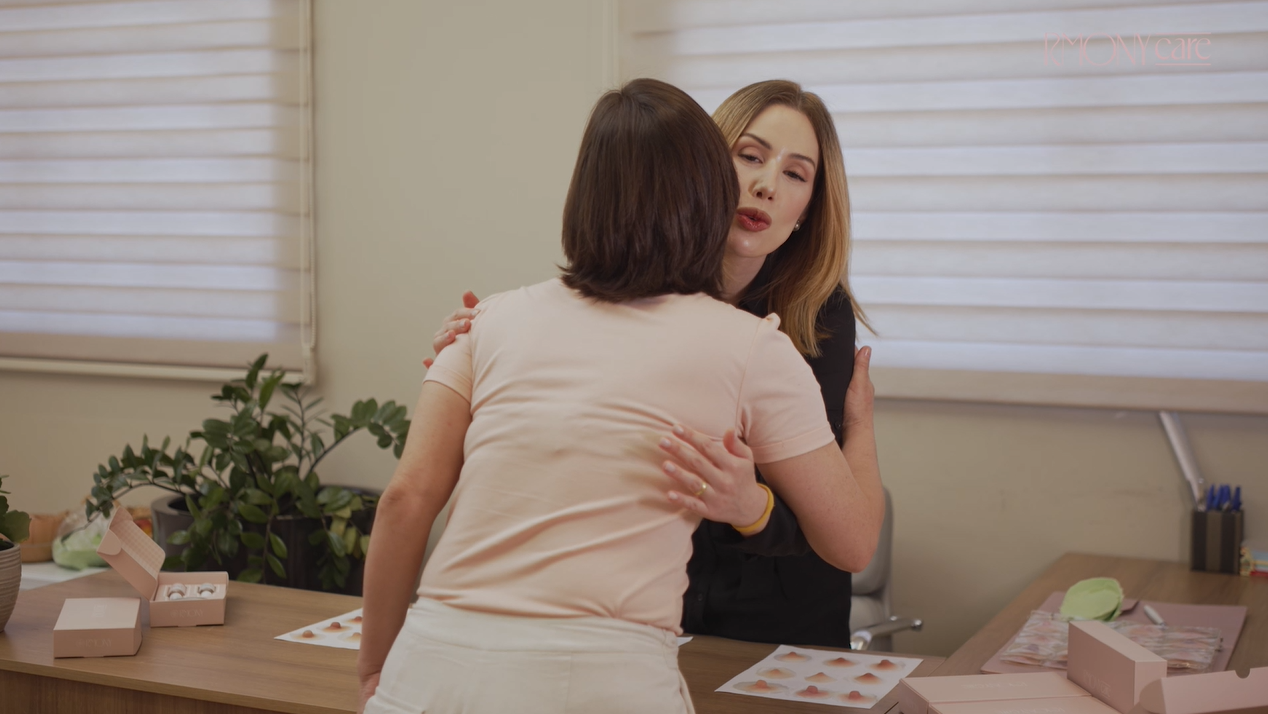
For every woman who left the hospital feeling more lost than she expected — this one is for you.
The Day Everything Changed — Twice
The first time everything changed was the day of the diagnosis.
The second time was quieter. Smaller. It happened when you walked through your front door after surgery, and the house was exactly the same as you left it — and you weren’t.
No one warns you about that moment. The oncologist, the surgeon, the nurses — they did everything right. They saved your life. And yet, somewhere between discharge papers and your first morning back home, a question surfaces that no medical appointment is quite designed to answer:
What comes next?
What Falls Outside the Operating Room
Breast cancer surgery is extraordinary at what it does. Mastectomy, reconstruction, the clinical precision of an oncological team — these are among the most important interventions a woman can receive.
But recovery doesn’t end in the operating room. And the questions that follow surgery — about your body, your reflection, your sense of self — don’t come with a prescription.
Most women describe a version of the same experience:
“I was grateful to be alive. And I also didn’t recognize myself. And I didn’t know I was allowed to feel both things at the same time.”
You are allowed to feel both things. The grief of what changed and the gratitude for being here are not opposites. They live side by side — and they both deserve attention.
The Questions No One Prepares You For
After mastectomy, women often find themselves searching for answers to questions that feel too small to bring up with a surgeon, and too large to navigate alone:
- 💭 Will I ever feel comfortable in my own skin again?
- 💭 Is there a way to restore what was lost — without more surgery?
- 💭 Am I supposed to feel this way, or is something wrong?
- 💭 Where do I even begin?
These are not small questions. They are the architecture of identity — and they matter enormously.
Recovery Is a Journey With More Than One Stage
What most women don’t know is that post-mastectomy recovery has a pathway — a series of steps that exist specifically to address what comes after clinical care. Not instead of it. Alongside it.
At RmonyCare, we built an integrated 3-stage recovery solution for exactly this moment:
Stage 01 · Before Surgery — A custom mold kit that preserves the natural shape of your areola before mastectomy. A step most women never hear about — but one that makes everything after more personal and more precise.
Stage 02 · After Surgery — Handcrafted silicone areola and nipple prostheses, made in Dallas, TX. Matched to your skin tone, your anatomy, and your case — whether unilateral or bilateral. No surgery. No downtime. Ready when you are.
Stage 03 · When You’re Ready — Permanent areola restoration through medical micropigmentation. Optional. On your timeline. Never rushed.
Each stage is independent. You don’t have to do all three. You don’t have to do any of them on anyone else’s schedule. Recovery is yours — and the pace is yours too.
You Don’t Have to Figure This Out Alone 💛
RmonyCare does not replace your oncologist or your surgeon. They did — and continue to do — work that we deeply respect and would never compete with.
What we do is fill the space that comes after the operating room. The space where body image lives. Where identity rebuilds. Where a woman looks in the mirror and slowly — in her own time — begins to recognize herself again.
If you’re not sure where to start, we offer a free call with our team. No commitment. No pressure. Just a conversation about where you are and what might help.
📍 RmonyCare solutions begin where surgery ends — and continue for as long as you choose to go.
Start Your Recovery Journey → Book a Free Call →
About the author: Roberta Peixoto has over 15 years of experience in oncological micropigmentation, has completed 500+ areola reconstruction cases, and is the founder of RmonyCare and of Roberta Peixoto Academy.
Share:
What Is Areola Micropigmentation — and Is It the Same as a Tattoo?
I Looked in the Mirror After My Mastectomy — and Didn’t Recognize the Woman Looking Back